
A mixed economy is an economy that has elements of planning and elements of the free market. Interdependence refers to the idea that economic decision-makers interact with and depend on each other. Interdependence occurs in a mixed economy because the decisions of households, firms and government affect one another's income and spending.
The circular flow of income is a simplified model of the economy that shows the flow of money through the economy. It shows how spending by one decision-maker becomes income for another and may then be spent again. Its two central decision-makers are households and firms. The model also includes the financial sector, government and the foreign sector to show further interdependence through saving and investment, taxation and spending, and international trade. Figure 1 traces these money flows.
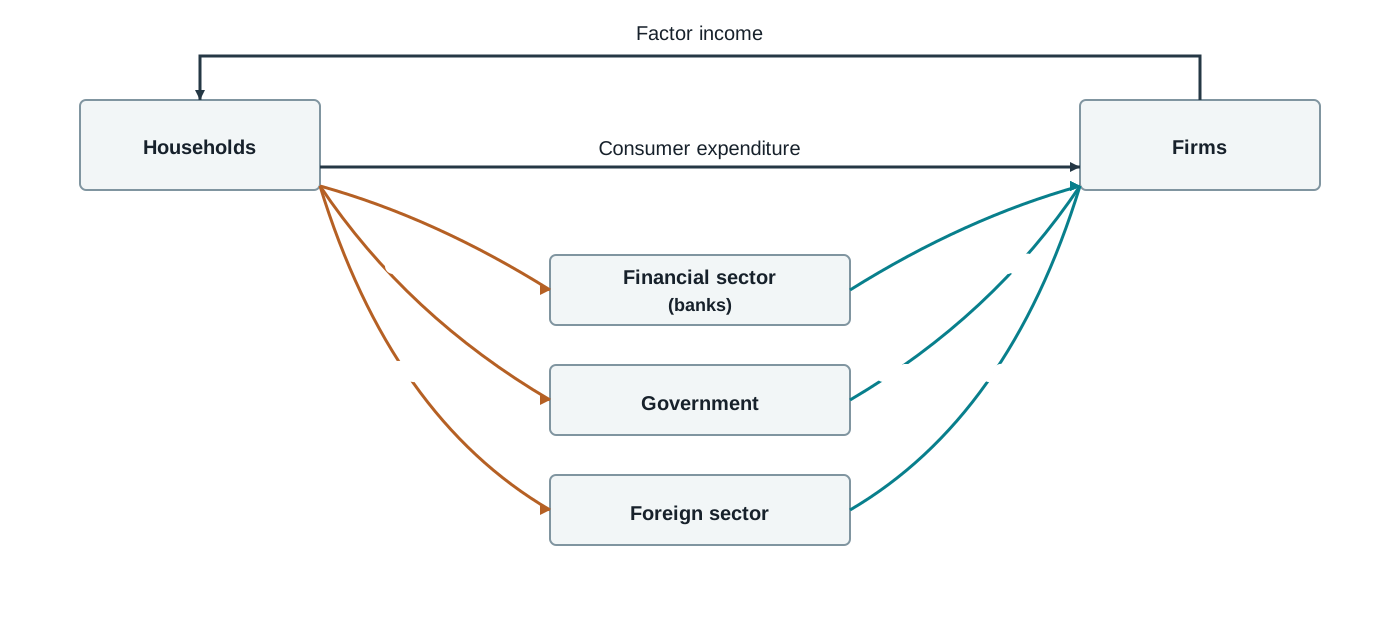
Figure 1 first shows the interdependence between households and firms. Households supply labour and other factors of production to firms, which pay households factor income in the form of wages, rent, interest and profit. Households then use some of this income to buy the goods and services firms produce. Household expenditure becomes firms’ revenue, enabling firms to continue paying for factors and producing output. Households and firms are therefore interdependent: households depend on firms for income and goods, while firms depend on households for factors of production and customers.
The financial sector shows another form of interdependence between households and firms. Households save some income rather than spending it on current output; banks can channel these savings to firms to finance investment. Firms can therefore depend on household savings for investment funds, while households can receive interest on their savings. Government also creates interdependence between households, firms and government. Households pay taxes to government, which spends on goods and services supplied by firms. Government depends partly on tax revenue to finance this spending, while firms and their workers receive revenue and income from it. This shows how taxpayers and recipients of government spending are interdependent even without a direct purchase between them.
The foreign sector shows interdependence between buyers and sellers in different countries. Domestic importers pay foreign sellers, while foreign buyers pay domestic exporters. Foreign sellers depend on domestic buyers for revenue, while domestic exporters depend on foreign buyers for revenue. In Figure 1, saving, taxes and import spending are leakages from domestic expenditure; investment, government spending and export revenue are injections into it. A change in one flow can therefore alter firms’ revenue, their demand for factors of production, household income and subsequent household spending. The circular flow of income thus shows how the decisions of one group affect the income and spending of others.