
Scarcity is the limited availability of economic resources relative to society’s unlimited demand for goods and services. Land, labour, capital and entrepreneurship are the four factors of production: the resources used to produce goods and services. They have alternative uses, but their availability is limited in every economy. No economy, however wealthy, can produce everything people want. It must therefore choose what and how much to produce, how to produce it and for whom.
Opportunity cost is the next best alternative foregone when an economic decision is made. Scarcity gives rise to opportunity cost because factors committed to one use cannot simultaneously serve their next best alternative. Whether an economy relies mainly on markets or government planning changes who makes the decisions, but not the need to choose between competing uses of resources. Figure 1 applies this trade-off to education and healthcare services.
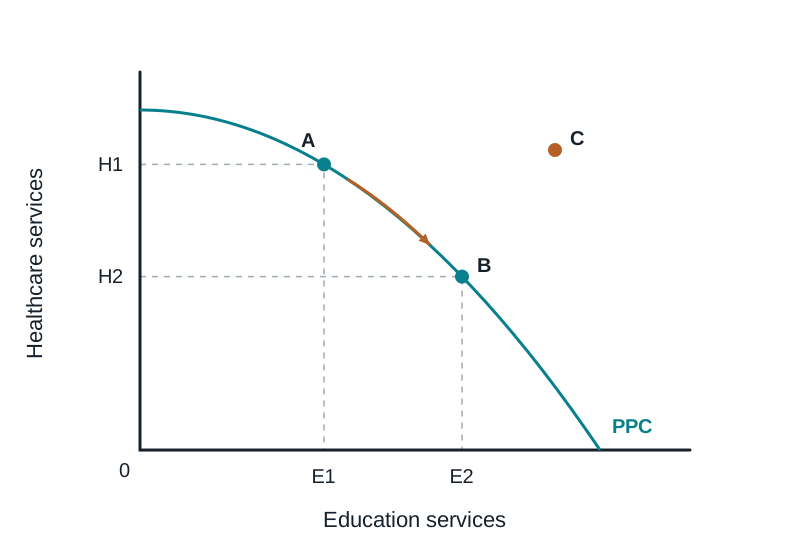
The PPC in Figure 1 shows the maximum combinations of education and healthcare that a hypothetical economy could provide with its available factors of production and technology, assuming resources are fully and efficiently used. At A, the government provides E1 education services and H1 healthcare services. To reach B, it devotes more resources to education—for example, funding additional teachers and classrooms rather than additional healthcare workers and clinics. Education rises to E2, but fewer resources remain to provide healthcare, so healthcare falls to H2. The healthcare services forgone, H1 minus H2, are the opportunity cost of the extra education. Moving from B back to A would reverse the choice: more healthcare would require giving up some education. Point C lies beyond the PPC and cannot be produced with the economy’s current resources and technology.
The particular services and decision-maker are hypothetical, but the constraint is universal. Because factors of production are limited and have alternative uses, every economy must choose among attainable combinations and forgo its next best alternative.